Equine
Companion Animals
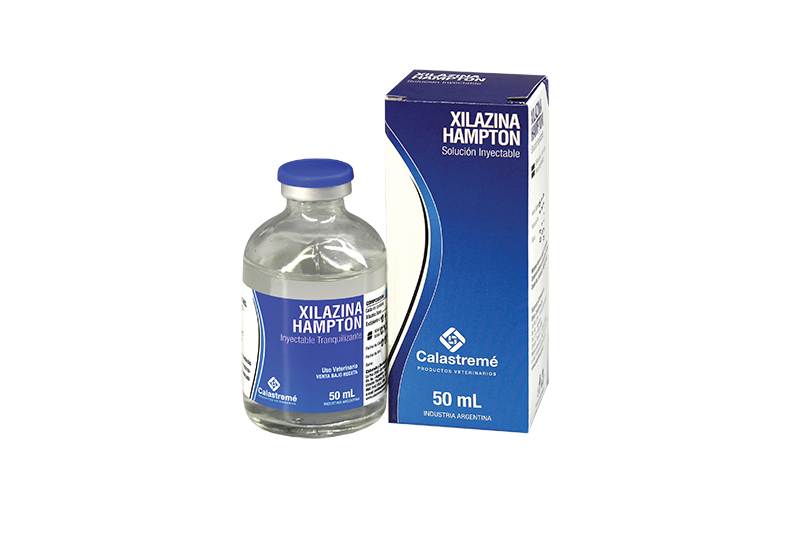
Xilazina Hampton
TRANQUILIZER AND PSYCHOTROPIC
Vials x 10, 20 and 50 ml
Formula:
Xylazine base 100 mg.; Sterile vehicle q.s. 1 ml.
Indications:
Diagnostic procedures, oral and ophthalmic examination, abdominal palpation, rectal palpation, vaginal examination, bladder catheterization and radiographic exams.
• Orthopedic procedures.
• Dental procedures.
• Minor short-duration surgeries, suturing.
• Tranquilizer, to facilitate handling of unruly animals.
• Major surgeries, as a pre-anesthetic or together with local anesthesia.
• Pharmacology: Xylazine is a non-narcotic compound, a sedative, analgesic and muscle relaxant.
Dosage and routes of administration:
Dogs and cats: 0.5 to 1 mg/kg bw IV - 1 to 2 mg/kg bw IM • Cattle: 0.03 to 0.1 mg/kg bw IV - 0.1 to 0.2 mg/kg bw IM • Horses: 0.5 to 1 mg/kg bw IV - 1 to 2 mg/kg bw IM • Sheep: 0.05 to 0.1 mg/kg bw IV - 0.1 to 0.3 mg/kg bw IM • Goats: 0.01 to 0.5 mg/kg bw IV - 0.05 to 0.5 mg/kg bw IM • Ornamental birds: 5 to 10 mg/kg bw IM
Contraindications:
Contraindicated in animals during the last month of pregnancy, except at parturition, since Xylazine may cause abortion or premature birth. Do not use in dairy cows in production.
Precautions:
In cattle, sheep and goats, smaller doses should be used if sedation without recumbency is desired. Dogs and cats should be fasted for 6 to 12 hours as it may cause vomiting. In dogs, bradycardia, heart block and acute arterial hypotension may occur, and at high doses, respiratory depression. Atropine sulfate (0.11 mg/kg or higher) administered IV immediately before Xylazine administration prevents heart block. It should not be used together with neuroleptics or tranquilizers. The combined use of Xylazine and barbiturates produces additive depressant effects. When barbiturates are used to induce anesthesia, they should be given at a reduced dose and administered slowly. Weak animals with insufficient respiration, heart disease, renal and hepatic impairment, shock or any other stress condition should be monitored carefully during Xylazine administration. When injected intravenously it should be given slowly. Intracarotid arterial injection should be avoided. Xylazine reduces intestinal and forestomach motility in cattle and lowers plasma glucose concentration; this should be taken into account in animals with gastrointestinal and hemodynamic disorders.
Back to products
Formula:
Xylazine base 100 mg.; Sterile vehicle q.s. 1 ml.
Indications:
Diagnostic procedures, oral and ophthalmic examination, abdominal palpation, rectal palpation, vaginal examination, bladder catheterization and radiographic exams.
• Orthopedic procedures.
• Dental procedures.
• Minor short-duration surgeries, suturing.
• Tranquilizer, to facilitate handling of unruly animals.
• Major surgeries, as a pre-anesthetic or together with local anesthesia.
• Pharmacology: Xylazine is a non-narcotic compound, a sedative, analgesic and muscle relaxant.
Dosage and routes of administration:
Dogs and cats: 0.5 to 1 mg/kg bw IV - 1 to 2 mg/kg bw IM • Cattle: 0.03 to 0.1 mg/kg bw IV - 0.1 to 0.2 mg/kg bw IM • Horses: 0.5 to 1 mg/kg bw IV - 1 to 2 mg/kg bw IM • Sheep: 0.05 to 0.1 mg/kg bw IV - 0.1 to 0.3 mg/kg bw IM • Goats: 0.01 to 0.5 mg/kg bw IV - 0.05 to 0.5 mg/kg bw IM • Ornamental birds: 5 to 10 mg/kg bw IM
Contraindications:
Contraindicated in animals during the last month of pregnancy, except at parturition, since Xylazine may cause abortion or premature birth. Do not use in dairy cows in production.
Precautions:
In cattle, sheep and goats, smaller doses should be used if sedation without recumbency is desired. Dogs and cats should be fasted for 6 to 12 hours as it may cause vomiting. In dogs, bradycardia, heart block and acute arterial hypotension may occur, and at high doses, respiratory depression. Atropine sulfate (0.11 mg/kg or higher) administered IV immediately before Xylazine administration prevents heart block. It should not be used together with neuroleptics or tranquilizers. The combined use of Xylazine and barbiturates produces additive depressant effects. When barbiturates are used to induce anesthesia, they should be given at a reduced dose and administered slowly. Weak animals with insufficient respiration, heart disease, renal and hepatic impairment, shock or any other stress condition should be monitored carefully during Xylazine administration. When injected intravenously it should be given slowly. Intracarotid arterial injection should be avoided. Xylazine reduces intestinal and forestomach motility in cattle and lowers plasma glucose concentration; this should be taken into account in animals with gastrointestinal and hemodynamic disorders.